
Case study
EMS FireCell at London Zoo
12th Dec 2025
Background
Located in the heart of Regent’s Park, London Zoo is one of the world’s most renowned zoological parks and the oldest scientific zoo, operated by ZSL (Zoological Society of London). Covering 36 acres, the Zoo is home to more than 8,000 animals, ranging from exotic mammals and birds to reptiles, amphibians, and invertebrates. It plays a vital role in ZSL’s global conservation efforts, breeding programmes for endangered species, and public education, while also serving as a centre for pioneering scientific research.
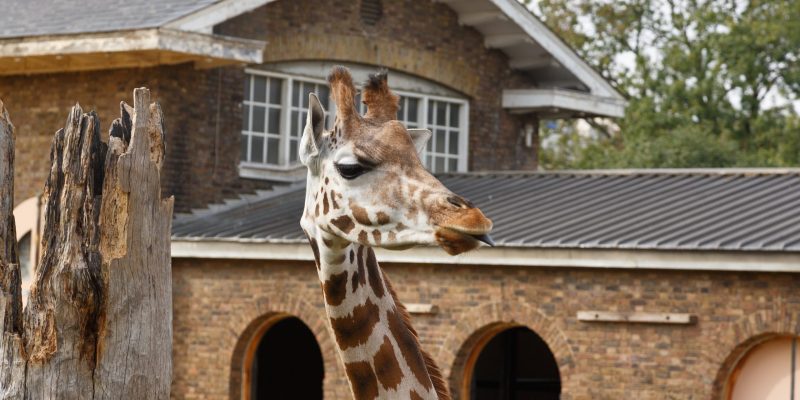
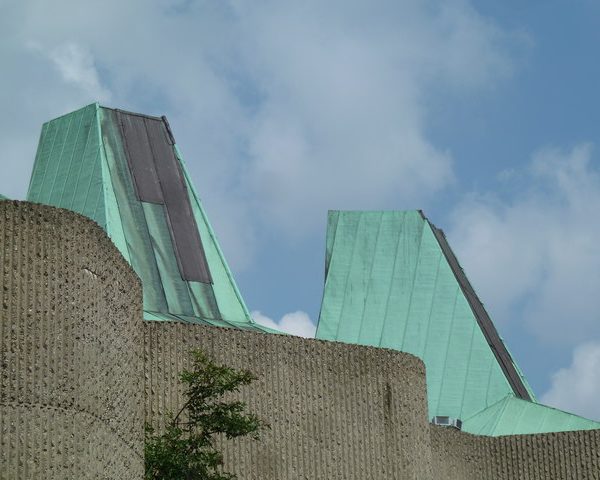
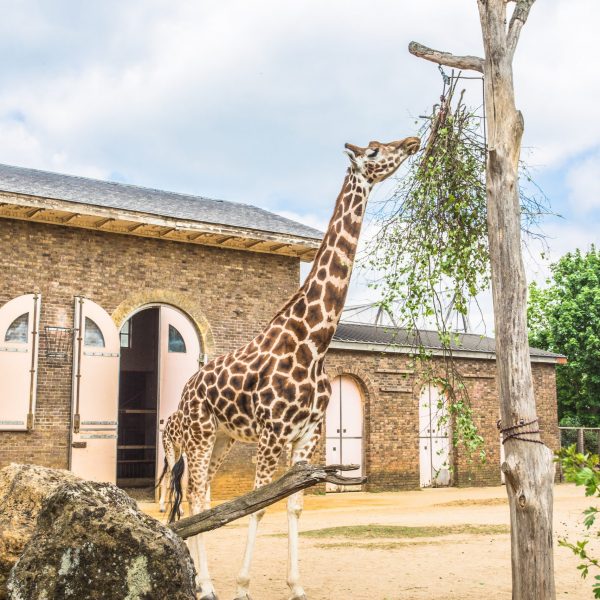
Since opening in 1828, London Zoo has also been celebrated for its architecturally significant buildings – including the Georgian Giraffe House, the oldest zoo building still in use for its original purpose, as well as iconic architectural works like the Casson Pavilion, the Snowdon Aviary (now Monkey Valley) and the Reptile House (now ZooTown – an immersive play space for children).
Balancing the preservation of these historic and often listed structures with the safety of animals, staff, and visitors presents unique challenges.
When it came time to upgrade fire protection across several key areas, ZSL required a modern, non-intrusive solution that would complement the Zoo’s heritage while operating effectively in a live, animal-focused environment.
Sowga Ltd were entrusted by ZSL to deliver this critical installation due to their proven expertise in fire detection systems and experience managing complex, high-profile environments with sensitive operational constraints.
Challenges
Installing fire detection systems within a live zoological park required meticulous planning, flexibility, and coordination with multiple stakeholders. Access to many areas was restricted due to animal enclosures, quarantine zones, and the daily routines of feeding and care. Any disruption could stress the animals or interfere with critical conservation and research activities.
Several of the buildings are heritage-listed, notably the Georgian Giraffe House and the Casson Pavilion, which once housed elephants and now accommodate Red River hogs, babirusas, and armadillos. Traditional wiring and invasive installation methods were unsuitable, as they could compromise the historic fabric or appearance of these culturally significant structures. In the Casson Pavilion, the building’s intricate and iconic design made the integration of wiring virtually impossible. Engineers had to navigate confined spaces, ceilings, and walls without compromising the integrity of the buildings.
Coordination with ZSL staff, careful timing around feeding and care schedules, and the need to minimise disruption to visitors and operational areas added additional layers of complexity.
Ultimately, the project demanded a solution that was fast, efficient, and non-intrusive, yet still delivered comprehensive fire protection across all high-risk zones.
Solution
To address the client’s requirements, Sowga Ltd quickly determined that installing three separate hardwired fire detection systems would be both impractical and time-consuming. The extensive cabling required would not only prolong the installation but also risk disrupting the Zoo’s daily operations and compromise the aesthetics of its historic buildings. In contrast, a wireless fire detection solution offered a faster, cleaner, and more adaptable alternative – without sacrificing performance or reliability.
After careful assessment, Sowga Ltd selected and successfully deployed two EMS FireCell wireless fire detection systems, integrating more than 130 wireless devices strategically distributed across multiple buildings within the Zoo. Each system was meticulously designed to deliver comprehensive coverage, ensuring the protection of both visitors and the diverse range of animals housed on-site.
The FireCell system proved to be the ideal choice, providing an exceptional combination of reliability, scalability, and rapid installation. Its cutting-edge wireless technology eliminated the need for intrusive cabling, enabling Sowga’s engineers to complete the project swiftly and efficiently. This approach significantly minimised disruption to the animals and preserved the architectural integrity of the Zoo’s heritage structures.
Furthermore, the solution provides a future-proof platform, allowing for easy expansion and maintenance as the site continues to evolve. The system’s advanced monitoring and communication capabilities ensure that any fire risk is detected and addressed promptly, offering ongoing assurance of safety and compliance with stringent fire protection standards.
Each system was carefully pre-surveyed and fully programmed before arriving on site, ensuring a smooth and efficient installation process. The survey was carried out and underwritten by EMS, guaranteeing robust and reliable wireless signalling throughout every area of the buildings. This thorough preparation enabled installation teams to complete the setup quickly, minimising disruption and reducing time spent on site.
The result was a clean, professional installation that met all safety and performance standards while preserving the unique character of the buildings. By combining EMS’s proven wireless technology with precise planning and expert execution, the project delivered modern reliability and peace of mind — without compromising the heritage aesthetics that define the spaces.
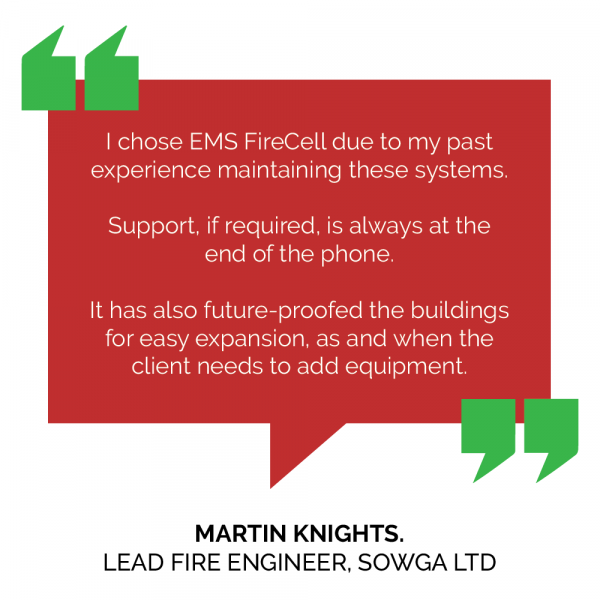
The installation process ran exceptionally smoothly, thanks to thorough pre-planning and close coordination between Sowga, the client and the on site Pareto team. Each system was commissioned efficiently, with all devices operating exactly as intended upon testing. Wireless signal strength and device reliability met, and in many cases exceeded expectations, ensuring uninterrupted communication across the entire network. Comprehensive testing confirmed consistent coverage and dependable protection throughout all designated areas, including the more challenging spaces, such as multi-level sections and areas with structural obstructions.
The end result was a robust, fully optimised system that provided the client with complete confidence in the safety and reliability of their fire protection infrastructure. Beyond meeting immediate requirements, the system was designed with scalability and future-proofing in mind, allowing for straightforward expansion or upgrades as the client’s needs evolve. This meticulous approach reinforced both operational efficiency and peace of mind, ensuring that the building’s safety measures remain effective well into the future.

Conclusion
The installation of two EMS FireCell wireless fire detection systems at London Zoo showcases how modern fire protection technology can coexist beautifully with historic architecture and sensitive animal environments.
Through expert planning, pre-programming, and collaboration with ZSL Pareto staff, Sowga Ltd delivered a fast, unobtrusive installation that ensures robust fire protection for one of London’s most iconic landmarks.
With more than 130 wireless devices now safeguarding areas including the Georgian Giraffe House, the project demonstrates the power of EMS FireCell to provide future-proof, reliable, and disruption-free fire safety – preserving history while protecting wildlife.

EMS FireCell
The EMS FireCell system represents a modern, flexible approach to fire detection and alarm management. Designed to scale effortlessly to support up to 8,000 wireless devices, FireCell delivers exceptional reliability and adaptability for medium to large projects. With free underwritten surveys, robust and dependable wireless signaling, and best-in-class UK-based support, FireCell offers complete confidence from design to installation. It’s a truly “fit and forget” solution that provides lasting performance, compliance, and peace of mind for every application.
For more information, contact EMS today!